The Search Intent Stack
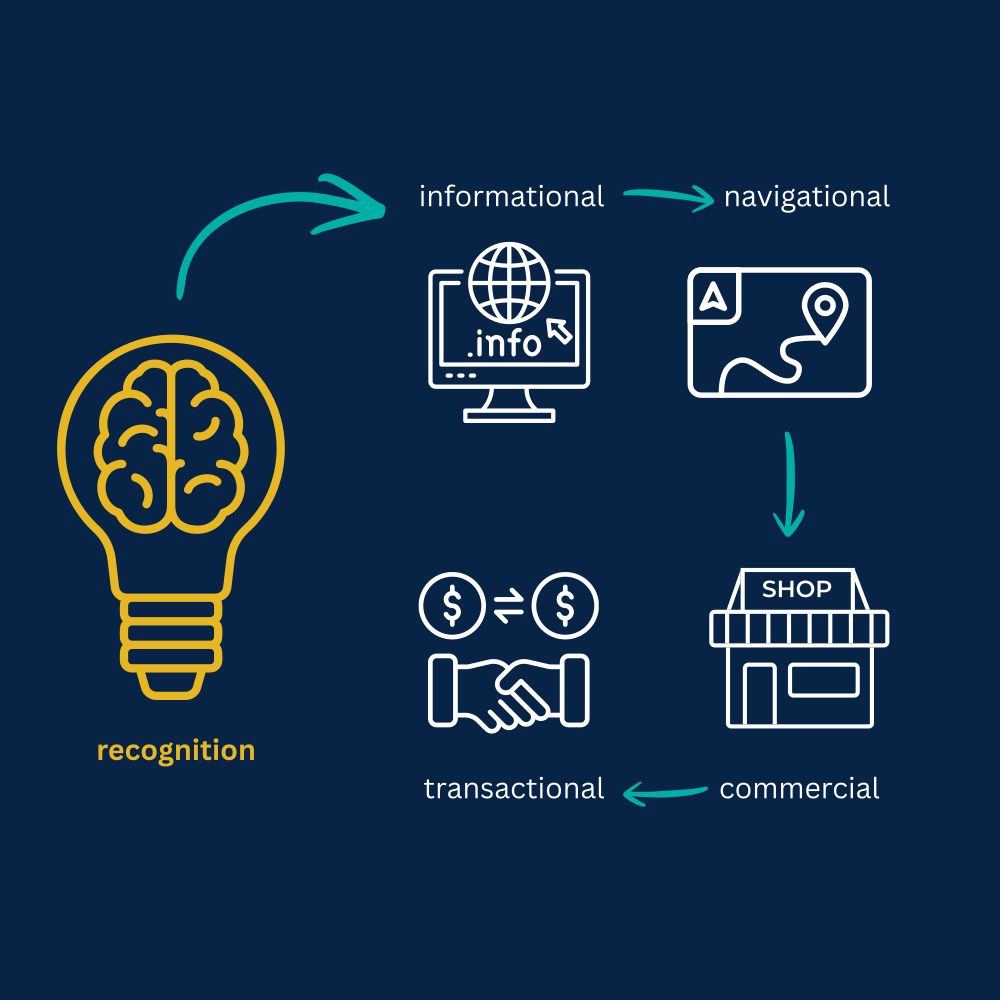
How Intent Actually Forms
Most marketing frameworks start with keywords, clicks, or conversions.
But intent doesn’t start there.
Before someone searches, compares options, or fills out a form, demand forms in stages. Each stage produces different signals, and each becomes visible at a different moment.
The Search Intent Stack explains how intent forms, surfaces, and becomes actionable over time.
Layer 1: Recognition Intent
Recognition Intent (the first stage of search intent and therefore, the first stage of demand).
It occurs when a person becomes aware that something needs attention—a problem, a need, or an opportunity.
At this stage, there may be no keywords, no comparison, and no outreach. Demand exists, but it hasn’t been expressed through search yet.
• What is search intent
• How does buyer intent work
• How lead generation software works
Layer 2: Informational Search Intent
Once recognition turns into curiosity, informational search intent appears.
This is when people begin using search engines to understand their situation, explore terminology, or learn how solutions work.
Informational intent answers questions—but doesn’t signal readiness to buy.
Layer 3: Commercial & Transactional Search Intent
As decisions progress, search intent becomes more specific.
Commercial and transactional searches reflect evaluation and readiness:
• Comparing options
• Reviewing providers
• Preparing to act
These searches are highly visible and highly competitive—but they occur later in the decision process.
Where Buyer Intent Fits
Buyer intent does not replace search intent—it overlays it.
Buyer intent reflects readiness to act and is inferred from behaviors like:
• Repeat visits
• Pricing page views
• Form submissions
• Direct contact
Buyer intent appears after recognition and search have already occurred.
Most marketing systems are built to detect the middle and bottom layers of the stack.
They measure:
• Keywords
• Clicks
• Forms
• Conversions
They don’t measure the earliest stage—where demand first appears.
This is why so much intent feels invisible, late, or misclassified as low quality.
Why the Order Matters
When intent is only captured after search or contact, businesses compete late and reactively.
Understanding the full stack allows demand to be recognized earlier, prioritized better, and engaged with more precision.
The earlier intent becomes visible, the more control businesses have over timing, messaging, and follow-up.
Seeing the Full Stack Changes Lead Generation
The Search Intent Stack doesn’t replace SEO, content, or advertising.
It explains how they fit together—and where visibility is typically lost.
When recognition, search, and buyer intent are understood as a progression, demand becomes easier to identify, qualify, and act on.
Continue Learning
© Shift Smart AI - All rights reserved